Shiva Najafi
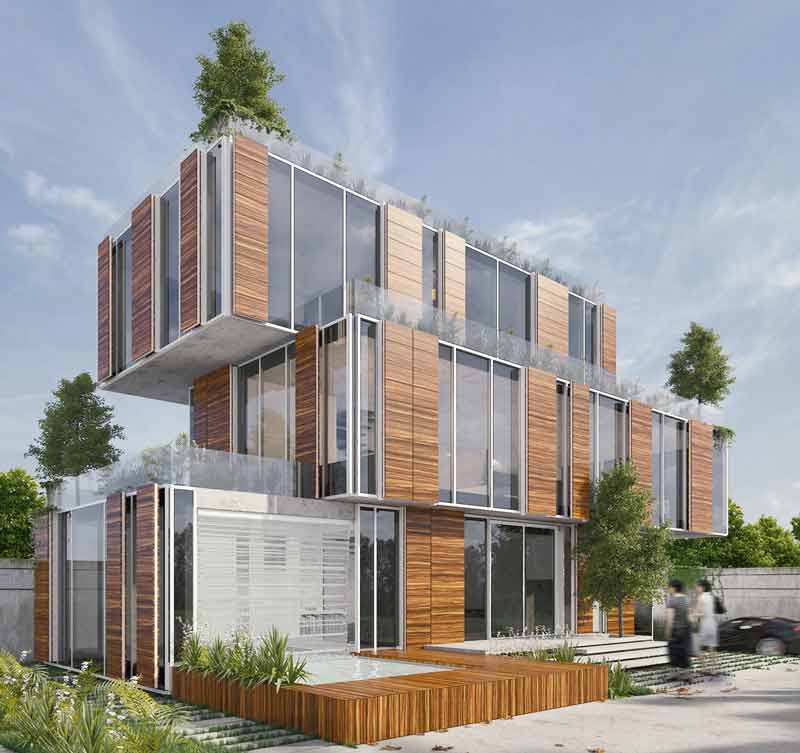
The subject of this project is the design of a dynamic facade system for a residential villa, capable of responding to varying environmental conditions and functional requirements.
The initial concept is based on a transparent cubic volume. In this approach, the aim was to replace a static facade with a responsive outer layer that allows control over transparency, daylight, and privacy.
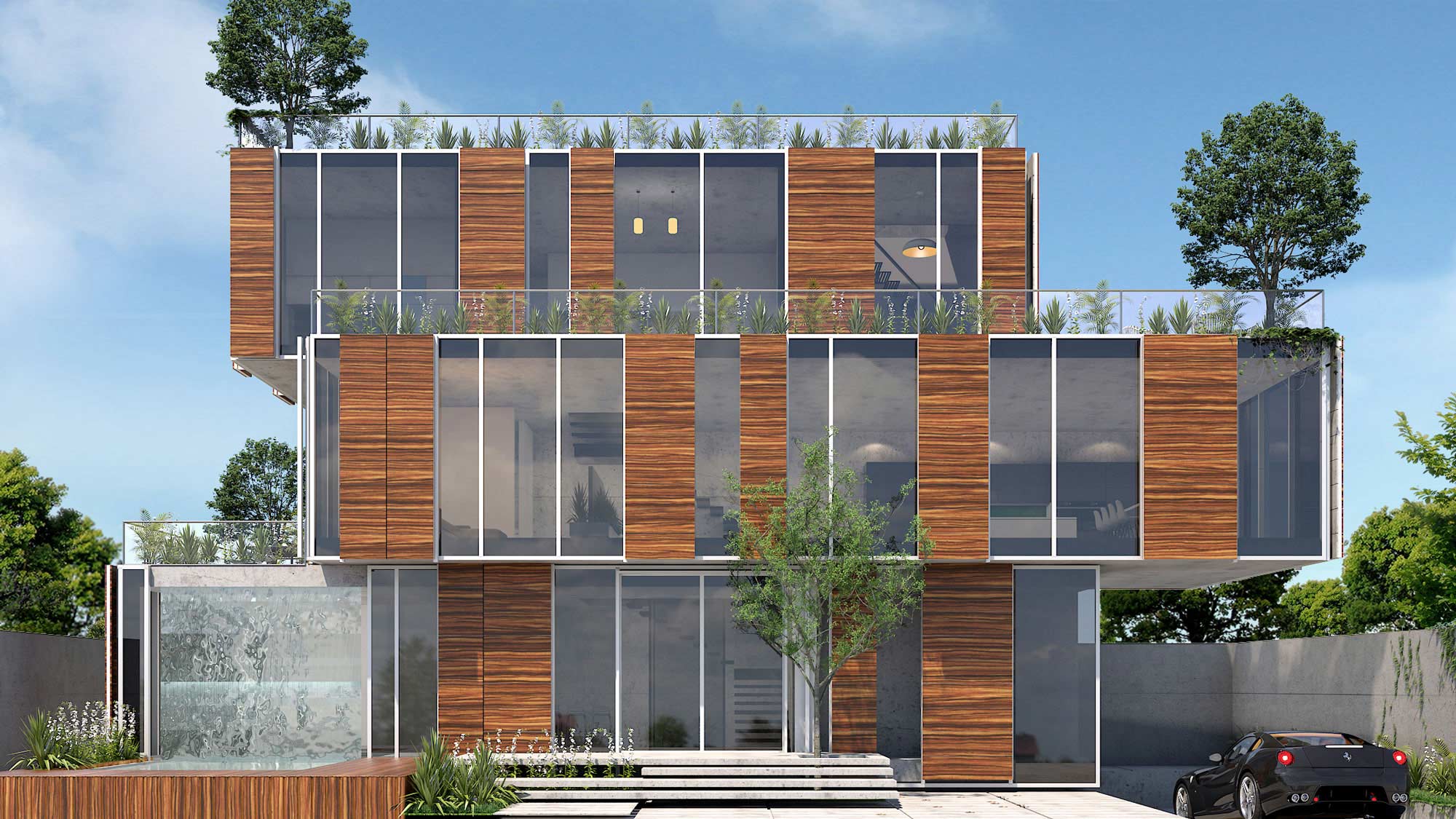
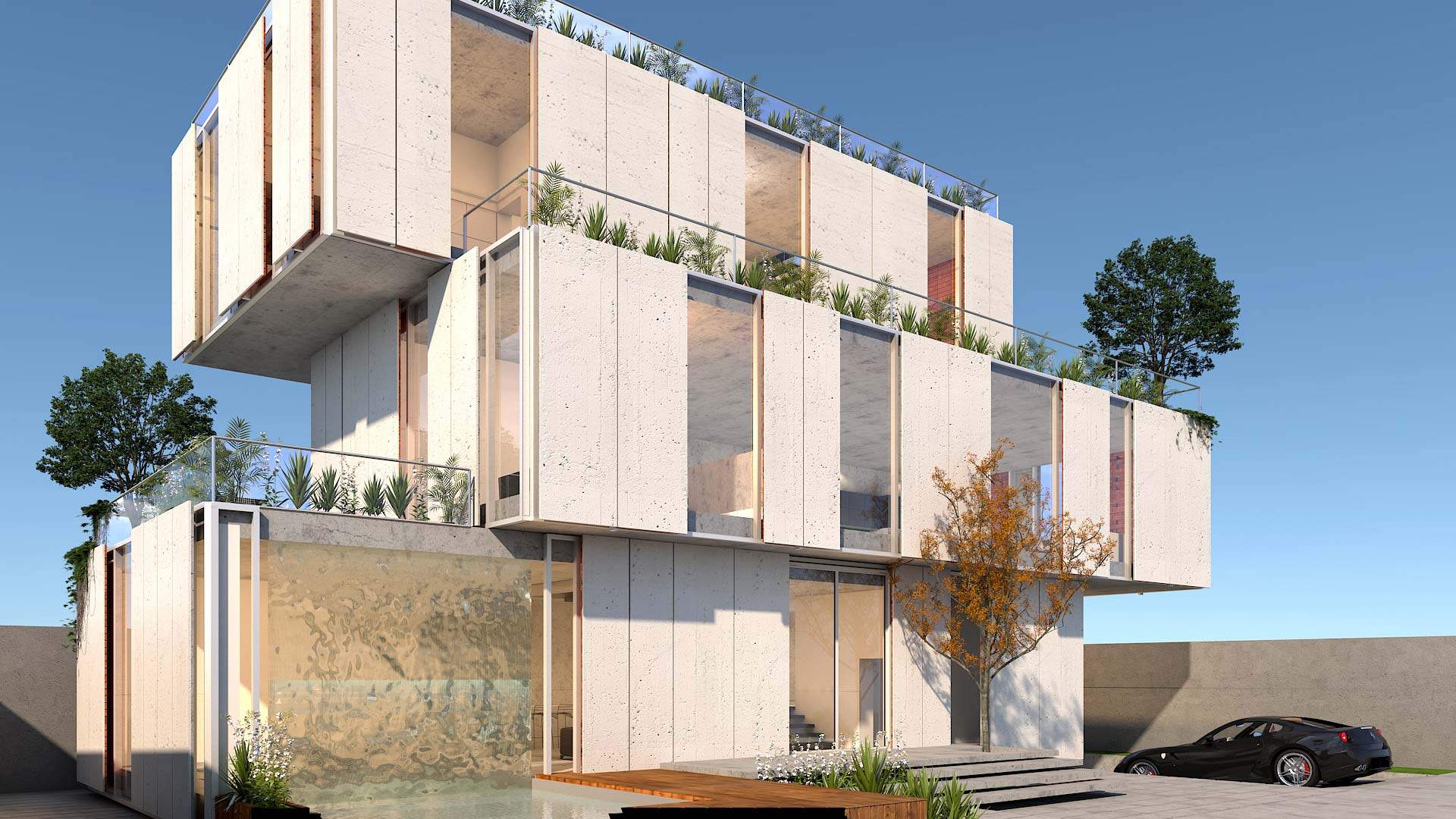
To achieve this, a hinged facade system was developed, in which panels are able to rotate in two directions. This mechanism enables the exposure of different materials on the facade and defines multiple performance scenarios for the building.
In the open state, as the panels fold away, the facade becomes more transparent, enhancing visual connectivity between interior and exterior spaces. This condition improves natural daylight and spatial quality.
In the winter configuration, wooden panels are presented as the outer layer. This material introduces a warmer atmosphere while contributing to improved thermal comfort during colder seasons.
Conversely, in the summer configuration, concrete panels act as a protective layer, reducing direct solar radiation and playing an effective role in controlling indoor temperature and optimizing energy performance.
One of the main challenges of the project was achieving a balance between aesthetic quality, functional performance, and climatic responsiveness within a simple and feasible system. The proposed solution is based on a modular and repetitive panel system that allows for flexibility with minimal complexity.
Finally, the roof is designed as an active and usable surface, functioning as the fifth facade and enhancing the overall spatial quality and livability of the project.


.jpg)
.jpg)
.jpg)
.jpg)
.jpg)
.jpg)